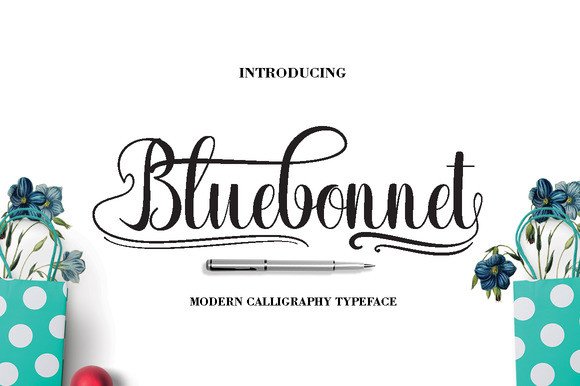
Bluebonnet: A Charming Script Font for Web Design
As I was designing the hero section for a new boutique online store, I stumbled upon Bluebonnet, a delightful and elegant script font. This typeface, with its flowing lines and intricate flourishes, immediately caught my eye and seemed perfect for adding a touch of sophistication to the website.
Visual Characteristics and Personality
Bluebonnet is a premium script font that exudes charm and elegance. Its decorative elements, such as graceful ligatures and flourishes, make it stand out in any design. The font's personality is both inviting and refined, making it ideal for projects that need a touch of luxury without being overly formal.
Using Bluebonnet in Website Headers and Hero Sections
For the boutique online store, I decided to use Bluebonnet in the main header and hero section. The font's unique style immediately set the tone for the brand, creating a memorable first impression. The flowing, handwritten feel of the font made the site feel more personal and less corporate, which was exactly what the client was looking for.
Readability and Visual Hierarchy
One of the key considerations when using a decorative font like Bluebonnet is readability. While it looks stunning in large sizes, such as in a hero title or section heading, it can be challenging to read in smaller text. To maintain a good visual hierarchy, I used a clean sans serif font for body copy and other supporting text. This combination not only enhanced readability but also created a balanced and professional look.
Bluebonnet in Call-to-Action Areas and Buttons
In call-to-action areas and buttons, I opted for a simpler, more legible font. However, I incorporated Bluebonnet in the button labels for a special campaign landing page. The result was a visually striking and engaging call-to-action that stood out and encouraged users to take action.
Brand Trust and Consistency
Consistency is crucial in building a strong brand identity. By using Bluebonnet consistently across the website, from the logo to the product descriptions, I was able to create a cohesive and polished look. The font's distinctive style helped establish a sense of trust and professionalism, making the brand more memorable and appealing to the target audience.
Mobile and Responsive Design Considerations
When designing for mobile and responsive layouts, it's essential to ensure that the font remains legible and visually appealing on smaller screens. For the boutique online store, I tested Bluebonnet at various screen sizes and found that it worked well in larger headings and titles. For smaller text, I switched to a more legible sans serif font, ensuring that the content remained accessible and easy to read.
Font Pairing for Web Design
To create a harmonious and balanced design, I paired Bluebonnet with a simple and modern sans serif font. This combination allowed the decorative elements of Bluebonnet to shine while maintaining clarity and readability in the body text. For a more editorial and sophisticated look, I also considered pairing Bluebonnet with a classic serif font, which added a touch of elegance and refinement.
Checking Font Availability and Licensing
Before using Bluebonnet in the project, I checked its availability as a webfont and ensured that it came with the necessary file formats, including WOFF and WOFF2. Additionally, I verified that the font included multiple weights and styles, as well as multilingual support, to cater to a diverse audience. Lastly, I reviewed the commercial font licensing to ensure that it was suitable for use in the client's online store and other digital assets.
Conclusion
Bluebonnet is a versatile and charming script font that can elevate any web design project. Its elegant and decorative style makes it an excellent choice for headers, hero sections, and branding elements. By carefully considering readability, font pairing, and responsive design, you can create a visually appealing and user-friendly experience that enhances your brand's digital presence.